Pressmeddelande / Publicerad 9 september 2022 15:17
The world’s churches agreed on the way forward
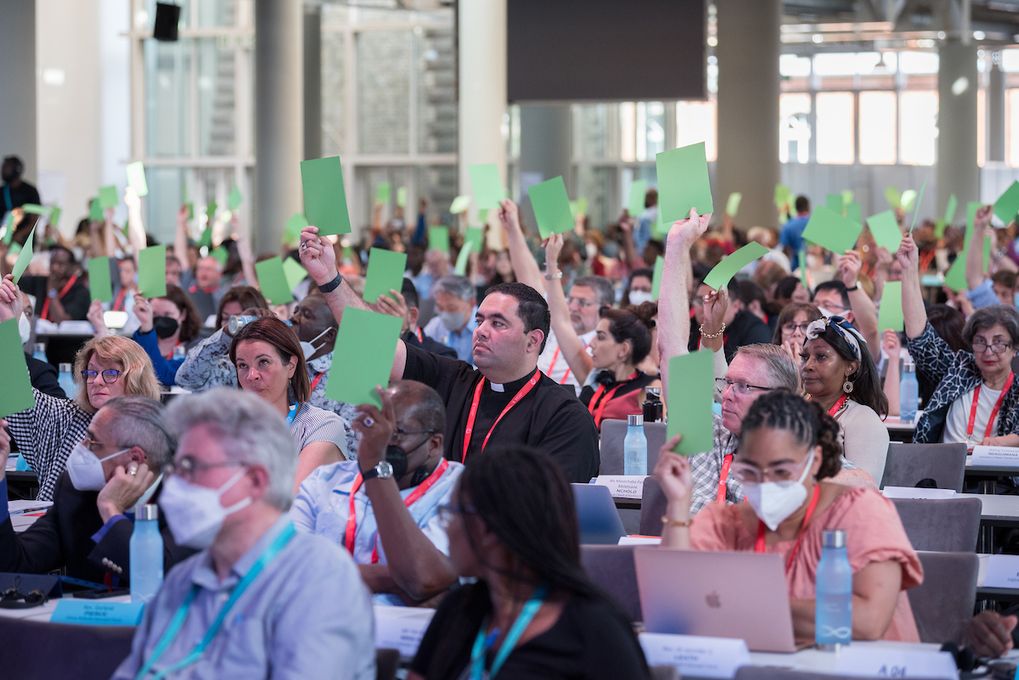
The 11th Assembly of the World Council of Churches, held in Karlsruhe, Germany, ended today. Four thousand participants from around the world gathered for nine intense days of prayer, worship and decision-making on the direction of the churches’ work over the coming years.
8 September 2022 18:40:35 | The Church of Sweden
The theme of the meeting was Christ’s love moves the world to reconciliation and unity. With this in mind, the churches have sought ways to tackle today’s global challenges.
The climate crisis and how it particularly affects already hard-hit parts of the world has long been high on the churches’ agenda. Karlsruhe sharpened that focus further, including the decision to appoint a special commission to push for climate justice – that the countries accounting for the majority of the world’s emissions also have a special responsibility to reduce them and deal with the consequences of global warming.
The churches’ relationship with indigenous peoples was another area that was clearly highlighted during the Assembly, with the need for reconciliation work similar to that which the Church of Sweden is engaged in with the Sami population.
Basic peace work was also given prominence, with churches emphasising the importance of interfaith dialogue and cooperation and of countering polarisation in their various contexts.
Clear commitments were also made to giving more space to young people’s voices and to groups with special needs.
Statements on topical issues
The Assembly also agreed on a number of statements, with the war in Ukraine and the situation in Israel-Palestine, as expected, generating the most intense discussions.
The statement on Ukraine calls the war unjust and demands an immediate ceasefire and withdrawal of Russian troops. However, voices calling for the exclusion of the Russian Orthodox Church from the fellowship were not heard, with the churches instead committing themselves to continued and intensified dialogue.
A number of churches have argued that the concept of apartheid is applicable to Israel’s policies towards the Palestinians, while others strongly oppose this. In its final statement, the Assembly criticises Israel’s settler policy and condemns violence from bots sides, but does not use the term apartheid to describe the situation, stating only that there is disagreement and that the struggle for a just peace must continue.
Prayer and worship united
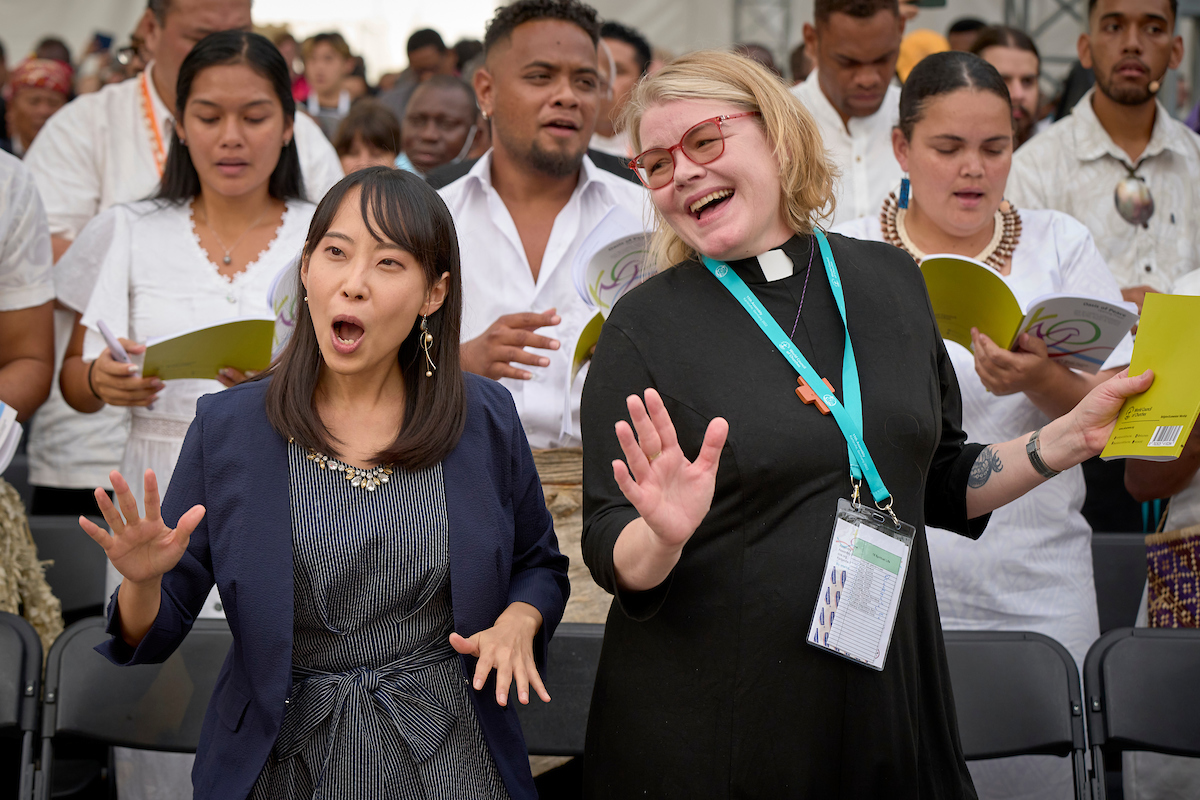
Many testimonies from the Assembly have highlighted fellowship in spite of differences and the strength of worshipping, singing and praying together in a variety of languages and traditions. This is also something that the head of the Church of Sweden’s delegation, Archbishop Antje Jackelén, wishes to seize upon.
“The most important thing is that we have actually met: several thousand people from all over the world, with a diversity that is both a joy and a challenge; in worship, Bible study and grappling with the great and difficult questions of our time.”
“We have spent a lot of time identifying the common voice of the churches, and we have taken steps forward on climate justice, war and peace, and on the conscious inclusion of youth and indigenous peoples. When we work on what is most challenging for humanity and we do so in the light of faith, hope is strengthened.”
New Central Committee
The Assembly also elected a new Central Committee, which is the governing body of the World Council of Churches. It consists of 150 members and is responsible for ensuring that the work decided upon is carried out. Three Swedish delegates were elected: Julia Rensberg and Celina Falk from the Church of Sweden and Emma Gunnarsson from the Uniting Church in Sweden.
New moderator
One of the Central Committee’s first tasks was to elect a new moderator (chairperson) of the World Council of Churches to replace Agnes Aboum of the Anglican Church of Kenya, who had held the post for nine years.
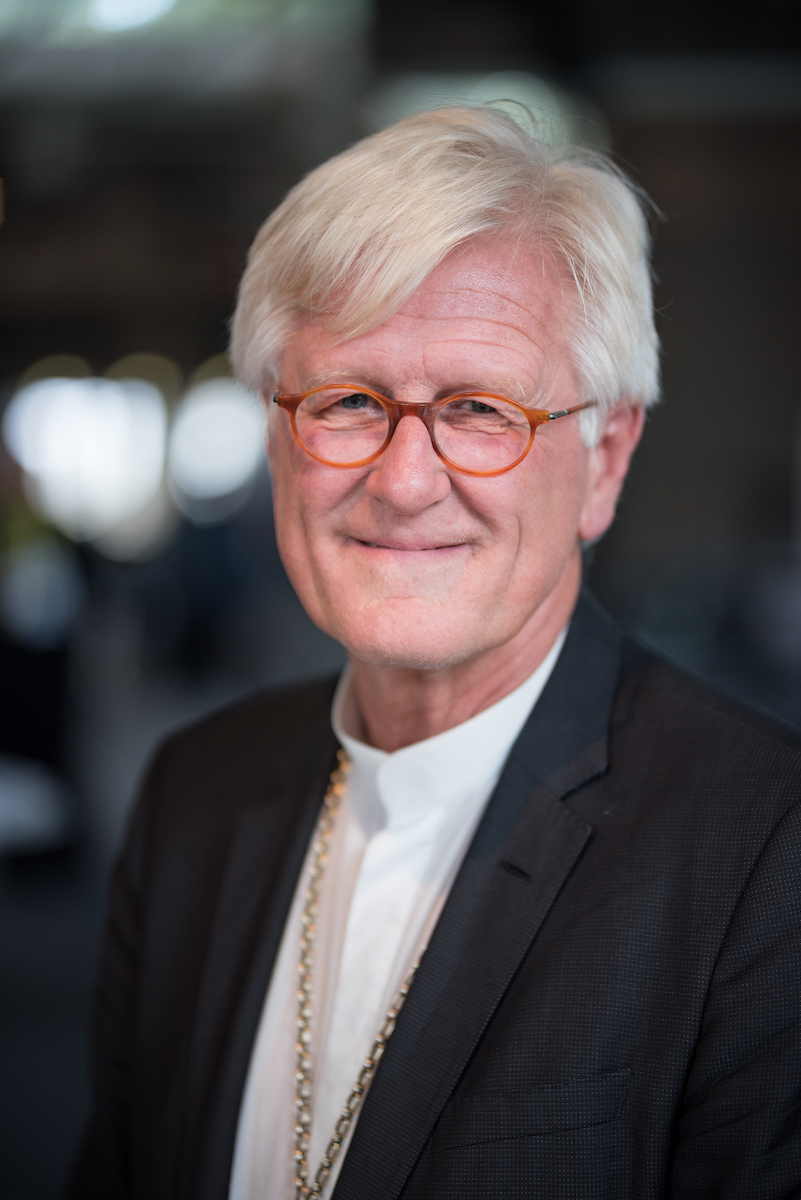
Bishop Heinrich Bedford-Strohm of the Evangelical Lutheran Church in Bavaria, Germany, was elected as the new moderator. Merlyn Hyde Riley, pastor of the Jamaica Baptist Union, and Archbishop Vicken Aykazian of the Armenian Apostolic Church were elected as vice moderators.
The World Council of Churches (WCC)
The World Council of Churches was founded in 1948 in Amsterdam. It is the largest ecumenical organisation in the world, with 352 member churches in 120 countries, representing nearly 600 million Christians worldwide. The overall goal is to work for unity among the world’s churches and to work together for peace, justice and sustainability. The World Council of Churches has its administrative headquarters in Geneva, Switzerland. The Assembly meets every eight years to take decisions, make joint statements and set the direction of work for the coming years.
Read more about the Assembly on the World Council of Churches’ website.
Kontakter
Press secretary on duty
-
Direkt: +46 18 16 94 75